
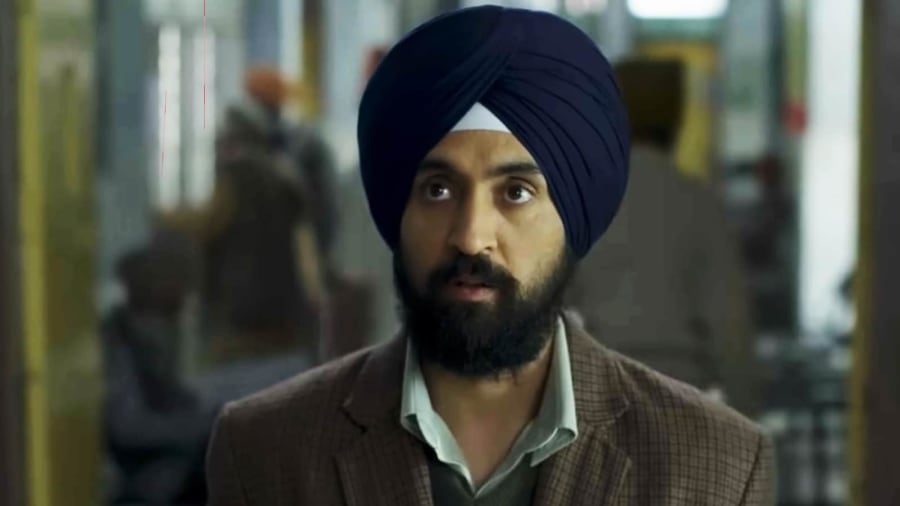
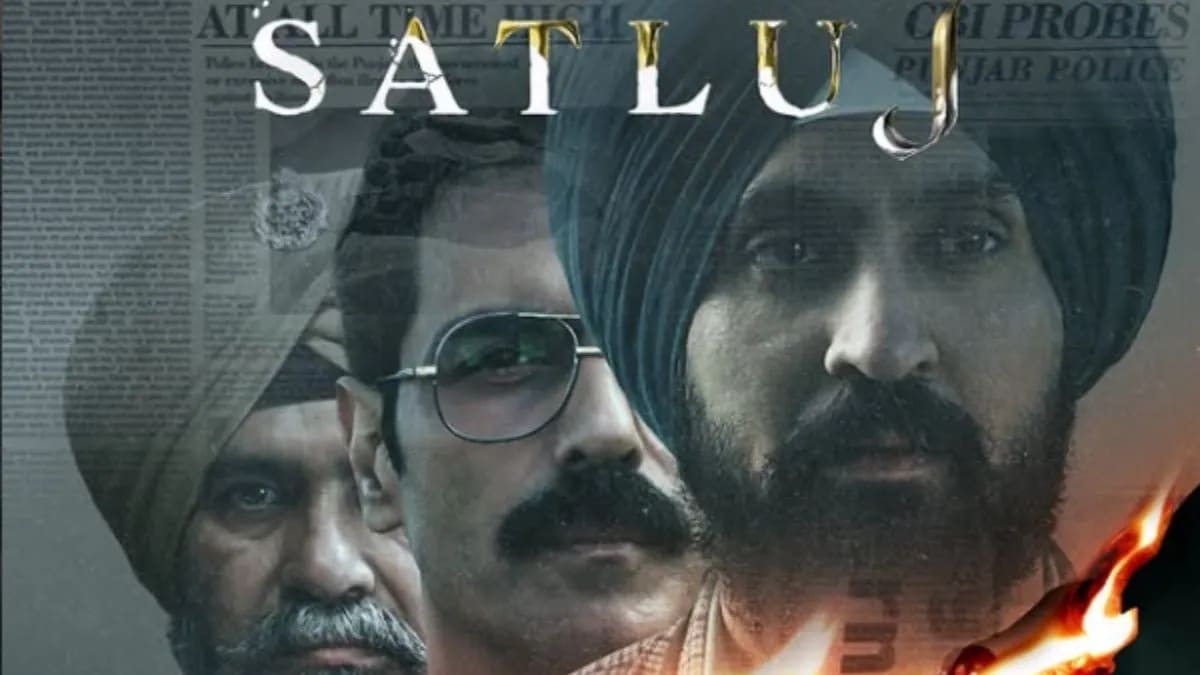
Diljit Dosanjh has never been one to shy away from roles that carry weight beyond the screen, and his latest project, Satluj, is proving to be one of the most talked-about releases of his career, not just for what it shows, but for how quickly it vanished from view.
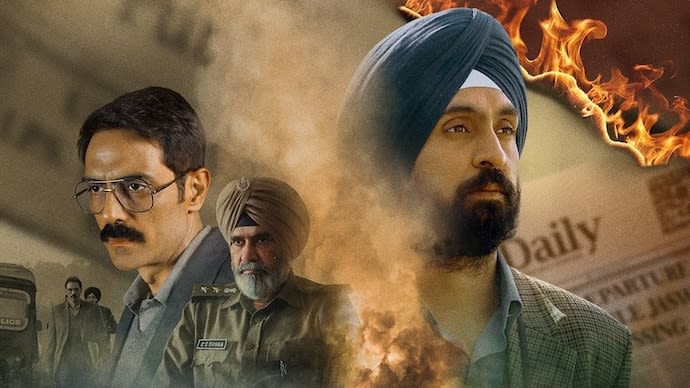
The film tells the story of Jaswant Singh Khalra, a bank employee from Amritsar whose ordinary life is upended when he notices something deeply unsettling, an unusually high number of unclaimed and unidentified bodies turning up at local morgues and cremation grounds. What begins as a passing curiosity slowly hardens into an obsession, then a full-fledged personal mission, and eventually a danger that threatens not just Khalra himself but everyone close to him. It is the kind of true-to-life narrative that demands a lead actor capable of restraint rather than spectacle, and Dosanjh appears to deliver exactly that.
Reviewers have pointed out that Dosanjh's portrayal avoids the usual trappings of heroism. His character is written and performed as someone who feels fear, who hesitates, and who is riddled with self-doubt at several points in the story, choices that make the performance feel grounded and believable rather than larger-than-life. This kind of understated acting is often harder to pull off than high-octane heroics, since it relies entirely on subtlety and internal conflict rather than dramatic dialogue or action set pieces.
What makes the film's journey to audiences even more notable is the road it took to get there. Originally titled Punjab 95, the project spent close to three years caught in a prolonged tussle with the censor board, which reportedly sought around 120 cuts before granting clearance. Rather than releasing in theatres, the film eventually found a home as a streaming title on ZEE5, premiering directly for digital audiences on July 3, 2026.
What happened next has arguably generated as much conversation as the film's content itself. Within roughly 48 hours of its streaming debut, ZEE5 withdrew Satluj from its Indian catalogue altogether. For a project that had already endured years of censorship battles before reaching viewers, this abrupt removal so soon after release has understandably triggered speculation and unease, particularly given the sensitive historical period the film engages with.
On craft, the film leans on tense, quiet conversations, understated threats, and small human betrayals rather than loud, dramatic confrontations, a stylistic choice that lends the story a slow-burning intensity. Some portions do feel stretched, and a tighter edit, perhaps trimming around fifteen minutes, may have served the pacing better. Even so, by the time the story reaches its conclusion, it leaves a lingering impression that is difficult to shake off, making its sudden disappearance from Indian screens all the more conspicuous.


Comments