
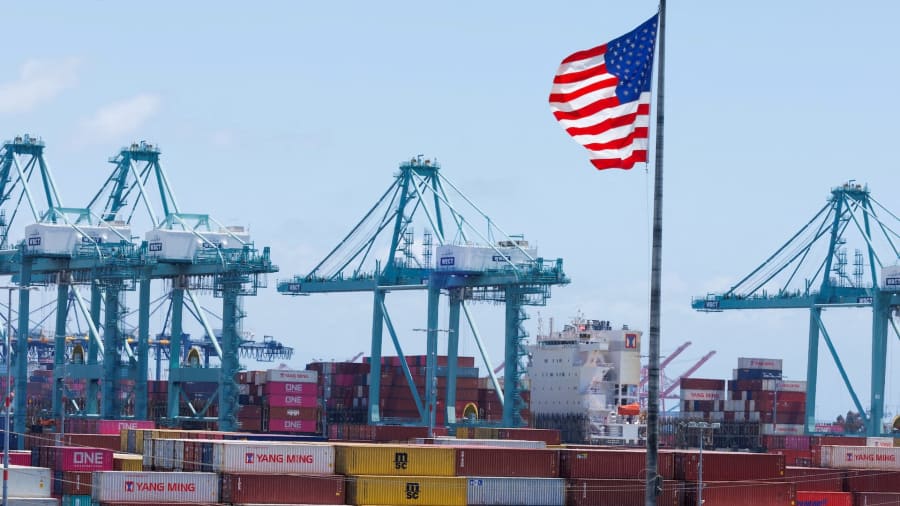
60 Countries Just Got Hit With New Tariffs, Here's Why
The long-anticipated new tariffs implemented by the US government took effect on Friday morning, impacting a staggering 60 countries with duties ranging from 10% to 12.5%. The move is part of a broader effort to tackle forced labor practices in supply chains worldwide.
A Brief History of Section 301
The new tariffs are being implemented under Section 301 of the Trade Act of 1974, a law that gives the US government authority to investigate and impose penalties on countries engaging in unfair trade practices. This legal tool has been used previously by the Trump administration to impose tariffs on Chinese goods.
In February, the Supreme Court struck down the emergency powers law invoked by President Trump to impose tariffs on steel and aluminum imports from Canada, Mexico, and the European Union. The ruling left a gaping hole in US trade policy, prompting the administration to turn to Section 301 as an alternative solution.
The Probe Behind the Tariffs
The investigation that led to these new tariffs began in mid-March, with the US Trade Representative (USTR) conducting an exhaustive review of supply chains across various countries. The goal was to identify nations that were not doing enough to prevent forced labor practices.
US Trade Representative Robert Lighthizer has been a vocal advocate for stricter regulations on forced labor. In a statement announcing the new tariffs, he emphasized that "the United States has been at the forefront of combating forced labor for nearly a century" and that it was time for other nations to follow suit.
The Tariff List: Who's Affected?
The 60 countries impacted by these new tariffs include almost every major US trading partner, including Canada, Mexico, India, the United Kingdom, the European Union, Taiwan, and Vietnam. The list is staggering in its breadth, covering a whopping 99.4% of US imports.
Interestingly, 17 countries – Argentina, Bangladesh, Cambodia, Guatemala, and Sri Lanka among them – received the lighter 10% rate because they had at least put some forced labor rules on paper. However, over 40 countries, including Vietnam and China, faced the full 12.5% tariff.
Reaction from Abroad
The new tariffs have sparked a heated debate globally, with many nations expressing their discontent. Canada's Prime Minister Mark Carney was quick to criticize the move, accusing Washington of breaking trade rules. The European Union also rejected the forced labor accusation, arguing that its own regulations were sufficient.
What's Exempt?
Not all goods are affected by these new tariffs. Oil, gas, fertilizer, and certain food items have been carved out of the new rules. This is a nod to the administration's previous efforts to mitigate the impact on US consumers.
The Connection to Trade Numbers
Funny how this fight over labor conditions lines up almost exactly with the trade numbers President Trump has long advocated for. By imposing tariffs on forced labor practices, the administration aims to create a level playing field and promote fair competition worldwide.
What's Next?
The new tariffs will run through Section 301 of the Trade Act of 1974, with a duration that is yet to be determined. As the global trade landscape continues to evolve, it remains to be seen how these developments will shape international relations and trade policies worldwide.
Timeline of Events
Here's a brief timeline of key events leading up to this development:
- February: The Supreme Court strikes down the emergency powers law invoked by President Trump to impose tariffs on steel and aluminum imports from Canada, Mexico, and the European Union.
- March: The US Trade Representative begins an investigation into forced labor practices in supply chains worldwide.
- Thursday, April 18: The temporary 10% global tariff imposed by President Trump after the Supreme Court ruling expires at 12:01 a.m.
- Friday, April 19: The new tariffs take effect, impacting 60 countries with duties ranging from 10% to 12.5%.
The implementation of these new tariffs marks a significant shift in US trade policy and underscores the ongoing debate over globalization, labor standards, and fair competition worldwide.




Comments