
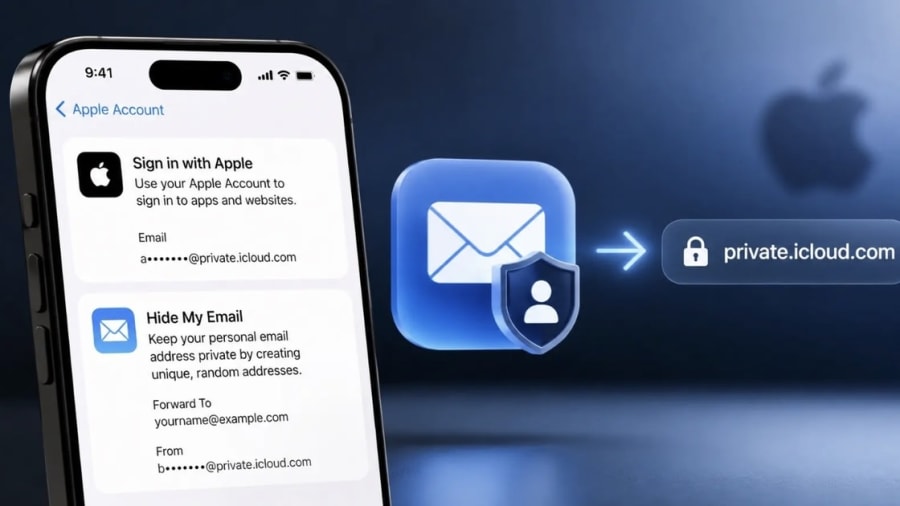
Apple has long positioned itself as the tech industry's privacy champion, and one of the quiet but powerful tools backing that image is Hide My Email. The feature, tucked inside iCloud+ and Sign in with Apple, lets users generate random, disposable email addresses whenever they sign up for a website, app, or newsletter, so their real inbox never gets exposed to marketers, data brokers, or hackers. Now, in a move that has caught privacy advocates and developers off guard, Apple is changing the technical backbone of this feature in a way that could make it far less effective.
Until now, every Hide My Email address ended in the same domain as a regular Apple ID, icloud.com. That was, in fact, the whole point. Because these random relay addresses looked identical to genuine Apple email accounts, apps and websites had no easy way to tell whether they were dealing with a real user or a privacy-shielded one. Going forward, Apple says new Hide My Email addresses will be created under a separate domain, private.icloud.com, clearly distinguishing them from standard Apple accounts.
On paper, this sounds like a minor technical tweak. In practice, it changes everything about how the feature functions. Once addresses are visibly tagged as "private" rather than blending in with the crowd, any website or app can instantly detect that a user is hiding behind a relay address. Some services, particularly those that rely on verified personal data for advertising, fraud checks, or loyalty programs, could choose to simply reject sign-ups from the new domain altogether, effectively locking out users who want to protect their identity.
Apple has reassured users that existing Hide My Email addresses created before this change will continue functioning exactly as before, forwarding messages to the user's real inbox without interruption. The company briefed app developers this week about the domain shift, and many are now reportedly updating their spam filters, verification systems, and backend logic to account for the new private.icloud.com addresses, a scramble that underscores just how significant this shift is for the ecosystem built around Apple's privacy tools.
For Indian users, who have increasingly leaned on iCloud+ subscriptions to shield personal data amid rising concerns over spam calls, phishing, and data leaks, the change raises real questions. Hide My Email has been a popular, low-effort way to avoid the flood of promotional emails and potential breaches that come from sharing a primary address with every app and service.
The timing has not helped Apple's case. The company is still facing scrutiny after reports emerged earlier this year that it handed over a user's actual identity to federal investigators, a move that sat uneasily with its carefully cultivated "what happens on your iPhone stays on your iPhone" messaging. Privacy advocates now worry that weakening the anonymity of Hide My Email, even if unintentional, sends a troubling signal about how seriously Apple is willing to defend user privacy when it becomes technically inconvenient or commercially sensitive.









Comments