
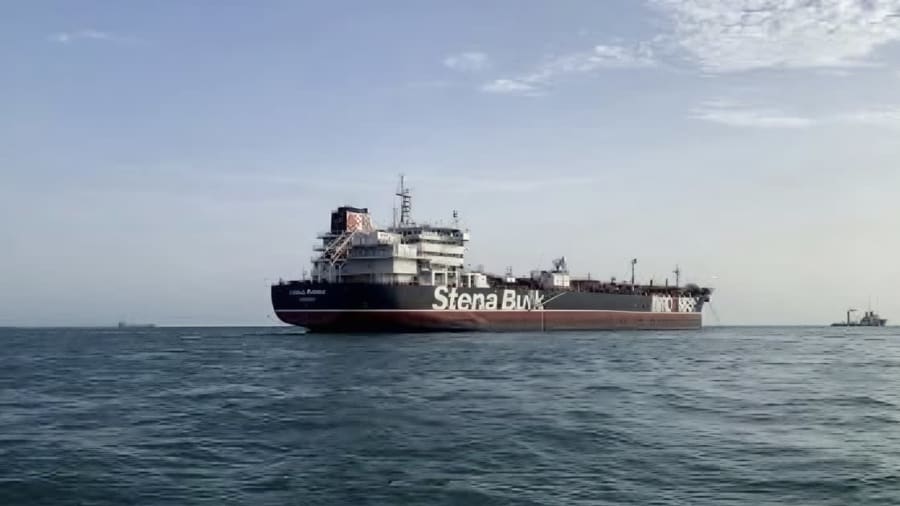
Iran's Islamic Revolutionary Guard Corps (IRGC) has issued a fresh warning to global shipowners, cautioning that any transit route through the Strait of Hormuz established without coordination with Tehran will be treated as "unacceptable and dangerous." The statement, made on Wednesday, marks the latest escalation in a maritime standoff that has upended one of the world's most critical energy corridors since the US and Israeli war on Iran erupted in late February.
For decades, the Strait of Hormuz functioned as a free navigational passage, with commercial vessels of every flag moving through its waters largely unhindered. That era of unrestricted access appears to be over. Iran's Persian Gulf Strait Authority has published a new official map designating a controlled maritime zone, effectively declaring that no ship may enter these waters without prior authorisation from Tehran. Given that roughly one-fifth of the world's oil supply passes through this narrow chokepoint between Iran and Oman, the implications of this new regime extend far beyond the Gulf itself, touching energy markets, shipping insurers, and consumers across the globe.
To enforce this system, Iran has rolled out a "Vessel Information Declaration," a detailed 40-question form that ship operators must submit by email to the Persian Gulf Strait Authority before their vessels are permitted to cross. The requirement effectively turns what was once a routine transit into a bureaucratic and politically sensitive process, forcing shipping companies to weigh compliance with Iranian demands against the risk of running afoul of international sanctions regimes.
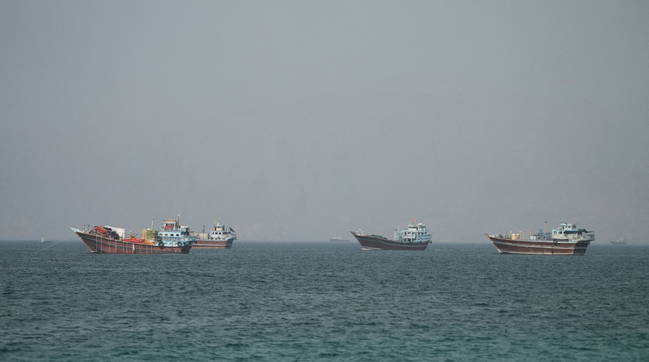
The practical effect on maritime traffic has already been significant. Shipping volumes through the strait remain well below pre-war levels, and a growing number of oil tankers have chosen to anchor off the coast of Oman rather than risk the crossing. Operators are moving with visible caution, wary of both the security risks in the region and the uncertain legal status of Iran's new declaration requirements.
Adding another layer of complexity, the US Treasury Department sanctioned Iran's Persian Gulf Strait Authority back in May, describing the body's actions as an attempt to extort global maritime trade. That designation puts shipping companies in a difficult position: comply with Tehran's demands and risk sanctions exposure, or refuse and face uncertainty, delay, or worse while attempting to navigate the strait.
The stakes go beyond shipping logistics and energy prices. The UN's Food and Agriculture Organization (FAO) warned on Wednesday that continued disruption or blockage of the strait could trigger a severe global food price crisis within the next six to twelve months, underscoring how a regional military and political standoff in the Gulf can ripple outward to affect food security and cost of living far beyond the Middle East. For India, which relies heavily on Gulf oil imports and maintains close trade ties with both Iran and Gulf Arab states, developments in the strait carry direct economic consequences that policymakers and industry watchers are likely to track closely in the weeks ahead.











Comments