
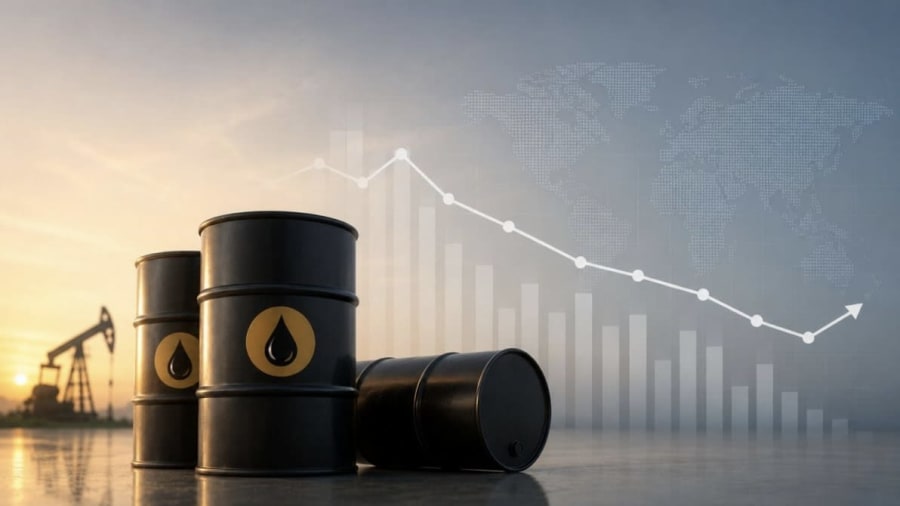
The tentative peace agreement between the United States and Iran has sent a wave of relief through India's energy establishment, and for good reason. India imports more than 85 per cent of the crude oil it consumes, making it one of the most import-dependent large economies in the world when it comes to energy. Any disruption in the Gulf region, therefore, is never just a distant geopolitical headline for New Delhi — it translates almost immediately into higher fuel bills, pressure on the rupee, and ripple effects across inflation-sensitive sectors of the economy.
The reason the Strait of Hormuz matters so much to India lies in simple geography and trade dependence. Roughly half of India's crude oil imports and close to 90 per cent of its liquefied natural gas (LNG) imports originate from West Asia, and the overwhelming majority of that cargo has to pass through this narrow chokepoint between Iran and Oman. When the strait comes under threat of closure or restricted shipping, insurance costs for tankers rise, shipping routes get rerouted or delayed, and global oil markets price in a risk premium almost overnight. For a country like India, which converts every dollar rise in crude prices into a wider trade deficit and costlier imports, months of uncertainty around Hormuz have been a genuine source of economic strain.
That strain was visible not just in oil markets but in the currency markets as well. The rupee, already under pressure from various global headwinds, weakened further as traders priced in the risk of a prolonged Gulf standoff and the possibility of shipping through Hormuz being blocked for an extended period. Higher crude prices tend to widen India's current account deficit, and that in turn puts downward pressure on the rupee — a cycle that policymakers in Mumbai and New Delhi watch closely.
Against this backdrop, the announcement of a preliminary peace deal and the prospect of the Strait of Hormuz reopening fully to normal shipping traffic has understandably been welcomed. Brent crude, the international benchmark that heavily influences the price Indian refiners pay, fell by close to five per cent in the immediate aftermath of the announcement. That kind of drop, even if it proves temporary, offers some breathing room for India's energy import bill and, by extension, for retail fuel prices and inflation expectations.
However, energy experts continue to caution against reading too much into a single diplomatic breakthrough. India's structural energy vulnerabilities — its heavy reliance on a handful of Gulf suppliers, its dependence on one critical maritime chokepoint for both oil and gas, and its limited strategic reserves compared to some other large economies — remain unchanged regardless of how the current deal plays out. A ceasefire or peace agreement can ease prices in the short term, but it does not, by itself, insulate India from the next round of volatility that West Asia's fragile geopolitics could bring. For now, though, Indian consumers and markets will take the relief wherever they can find it.














Comments