

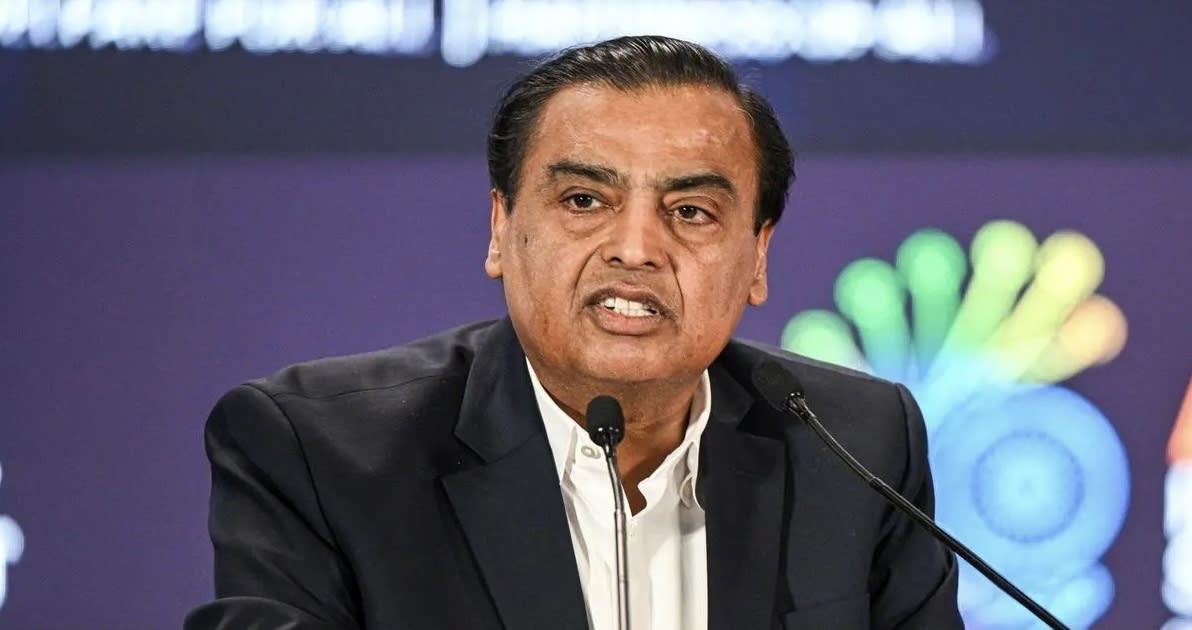
Mukesh Ambani kicked off Reliance Industries' 49th Annual General Meeting on Friday with an announcement that shareholders and market watchers had been waiting years to hear. The Jio Platforms board has formally cleared the company's initial public offering, and the paperwork will be filed with the Securities and Exchange Board of India (Sebi) today. For a stock that has been the subject of endless speculation ever since global investors first poured billions into Jio Platforms back in 2020, this marks the clearest signal yet that the country's largest telecom and digital services company is finally headed for the public markets.
The draft papers submitted to Sebi outline a fresh issue of up to 270 million shares, setting the stage for what is widely expected to be one of the biggest listings in Indian stock market history. Reliance has built Jio into far more than a mobile network operator over the past decade — it now spans broadband, digital payments, cloud services, and a rapidly growing portfolio of new-age technologies. An IPO of this scale would give retail and institutional investors alike a direct stake in that growth story, something many have wanted since Jio first disrupted India's telecom sector with dirt-cheap data plans in 2016.
What made this year's AGM address particularly striking was how Mukesh Ambani used the platform not just to confirm the listing, but to lay out a sweeping vision for Jio's next phase. In a single speech, he touched on satellite broadband, sovereign artificial intelligence, and clean energy — three areas that reflect where Reliance believes the next wave of growth and national relevance will come from. Sovereign AI, in particular, has become a talking point for Indian industry as the country looks to build its own AI infrastructure and reduce dependence on foreign technology stacks, and Jio's entry into this space signals the scale of ambition behind the group's digital push.
Akash Ambani, who has increasingly taken on a public-facing role in Jio's leadership, used his portion of the address to detail plans for a satellite-based network aimed squarely at India's connectivity gaps. The focus, he said, would be on villages and border towns that remain off the traditional network grid — areas where laying fibre or building cell towers is either too costly or logistically difficult. To make this happen, Jio will not go it entirely alone; the company plans to lease satellite capacity from global partners rather than building an independent satellite constellation from scratch, a pragmatic approach that could speed up rollout.
Taken together, Friday's announcements paint a picture of a company trying to do two things at once — take its most valuable digital arm public while simultaneously pitching investors on a future that extends well beyond smartphones and data plans. With the Sebi filing now in motion, the coming months are likely to bring more clarity on valuation, timelines, and exactly how large this listing will turn out to be. For now, the message from Reliance's AGM stage was unmistakable: the wait for the Jio IPO is finally nearing its end.












Comments